
What amount of things we don’t need will make us happy?
Author: Goran Pejakovic
The answer is obvious. There is no an amount of things we don't need that will make us happy.
Why do we than say, do and focus on things we do not need?
If we do not engage in things we need, we will engage in things we do not need.
So, finding out what we really need in life is crucial for our happiness.
THIS IS A COMPLETE NONSENSE
This event happened on a business workshop on communications. It shows how sometimes we will be challenged, and how our response will determine the course of mutual exchange and behavior.
As I explained a point on the screen in front of the fifteen listeners, mostly educators, one of them (we can call him John) stood up and exclaimed: “This is a complete nonsense.” When I turned around, to my surprise and wonder of other participants, there was one attendant of the workshop standing vividly upset with what I just said. You could tell that he is not ready to withdraw his words. On the contrary, he refused to accept any argument from the other participants who were supporting my claim.
At such moments it is easy to take things personally and try to protect your view through arguments and explanations. My response was: “If I understand you properly John, your opinion differs from what I just said.” John was still in his mood and continued: “Yes. Only a fool can think in this way.”
There was electrified silence in the room for a few moments. Everyone’s eyes were on me, waiting for my response. “Let’s agree that we disagree at the moment and see what will come about in the next sessions of the workshops. Is it okay?” John nodded silently, keeping serious look at his face, and added: ”Ok.” His demeanor showed that he is still ready to fight for his cause.
The workshops continued in friendly manner. At the end of the set of eight workshops I asked participants to tell what they will take away from the workshops. They had chosen different points they appreciated and then it was John’s turn to say something. You could sense in the audience that most of us were very interested in what will John say. He started in reconciliatory tone: “I liked the most when I attacked you and you did not fight back.” Most of the participants in the room, included me, smiled.
John’s example shows how our talk speaks more about us then about others. If we take the words of others personally, we will not be able to be there for the person and in this way we would miss an opportunity to contribute positively to someone’s life. If we can stay present for the feelings and needs of the person, we can sense a positive shift in their thinking, feelings and behavior and help them connect with deeper aspects of their being, which may enable them to look upon the matter at hand with a different, clearer vision of reality.
To Know the Meaning of Challenge, Know the Challenge of Meaning
“Man is not destroyed by suffering. He is destroyed by suffering without meaning.”
Viktor Frankl
Many people are not sure of their destination in life. That is the reason why some of them sound like the conversation bellow:
“Can you tell me please which way to go from here?”
“That depends a lot on where you want to arrive”, says the Cat.
“I don’t care ...”, says Alice.
“Then it’s not important which way you go”, says the Cat.
Lewis Carroll, Alice in Wonderland
 NIAGARA EFFECT NIAGARA EFFECT
If you enter a strong river in a boat not suitable for safe sailing and only with one oar, most probably you will struggle all the time just to stay in the boat. Occupied with your ‘life saving struggle’ you will be surprised to hear sudden noise that brings even more fear in your bones – the roar is the sign that you are approaching huge, dangerous waterfalls. Disaster is close ahead.
Life is sometimes like that. You struggle with everyday challenges to survive only to find that life end is approaching. At that moment most people tend to ask themselves considerably different questions:
What is gained by succeeding in challenges that will mean nothing to me when everything will be finished at death? Why do I exist? Why does anything exist? What is the point of it all?
Fragility of human existence brings the question of ultimate challenge – the challenge of meaning.
Faced with the challenge of meaning, people often feel emptiness in the heart. That’s the reason why some teachers say that two most important points in once life are: the day we are born and the day we discover why.
To know the meaning of challenge, know the challenge of meaning.
If there is nothing worth dying for in one’s life, there is nothing worth living for either.
As Helen Keller* said: “Life is either a great adventure or nothing.”
How to recognize where we are and what to do to arrive at the place we want to be?
CONVICTION AND CONVINIENCE DO NOT LIVE IN THE SAME PLACE
When you discover why you are here, it is time to leave the comfort zone and strive for your best version. Challenges will come in both comfort zone and in your search for the best version of yourself. Comfort zone does not prepare us for necessary sacrifice on the road of life. So, choose conviction and strive for the best.
On your journey of striving for your best version you need to learn to cope with challenging situations. Here are some questions which will show you where you are at the moment:
- Who do you become when you don’t get your way?
- What do you become when you are not recognized the way you want to?
- What do you become when you think life is unfair?
- Who do you become when not treated fairly?
- Who do you become when someone near to you is not treated fairly?
Are you proactive or reactive? Do you blame yourself and others or do you search for solution? Are you excuser or achiever? How do you take responsibility? How do you choose battles you wish to fight? Who is helping you?
If you remain faithful to the ideals you strive for, all the tests will only make you stronger.
Have big goals. Aim for the best. Ninety nine percent of people in the world are convinced that they cannot achieve anything great, so they aim for the mediocrity. The level of competition is sharpest exactly at the area of “realistic” goals. It usually means that such goals demand the most time and energy.
If you have extremely high goal, it will give you an injection of enthusiasm that will enable you to endure and overpower unavoidable temptations and challenges that come with any goal. “Realistic goals”, goals limited to the level of average ambition, do not give inspiration and will give you strength only for the first few problems you face, and then you will raise a white flag. If the potential result is mediocre or average, such will be your endeavour too.
The question is not: “What do I want?”
The question is; “What excites me?”
What will bring my life meaning? What will keep me going?
Choose things you are good at. Multiply results by using your strong side. Focus on your talents.
Once Albert Einstein said: " Everybody is a genius. But if you judge a fish by its ability to climb a tree, it will live its whole life believing that it is stupid."
Wisdom in a nutshell: Know your purpose, do your best and pray for the rest.
*(Helen Adams Keller (June 27, 1880 – June 1, 1968) was an American author, political activist, and lecturer. She was the first deaf-blind person to earn a bachelor of arts degree.)
A new view of spirituality - Business connection!?
EXCLUSIVE INTERVIEW WITH GORAN PEJAKOVIC, LECTURER, ADVISER AND PERSONAL TRAINER, ZAGREB CROATIA
PROGRESS IS SERIES OF ADJUSTMENTS IN RIGHT DIRECTION
Tatjana Stankovic, PXD SYSTEM INTERNATIONAL's Bord Director, had an excellent opportunity and honor to talk to Goran Pejakovic from Zagreb, Croatia, experienced lecturer, adviser and personal trainer on the topic that had brought many controversies, in our general believe and taught schedule of living. The Topic Spirituality Business has now became one of most discussed topics, especially when that topic brings new PARADIGM in the DEFINITION OF SUCCESSFUL BUSINESS ON LONG TERM BASIS.
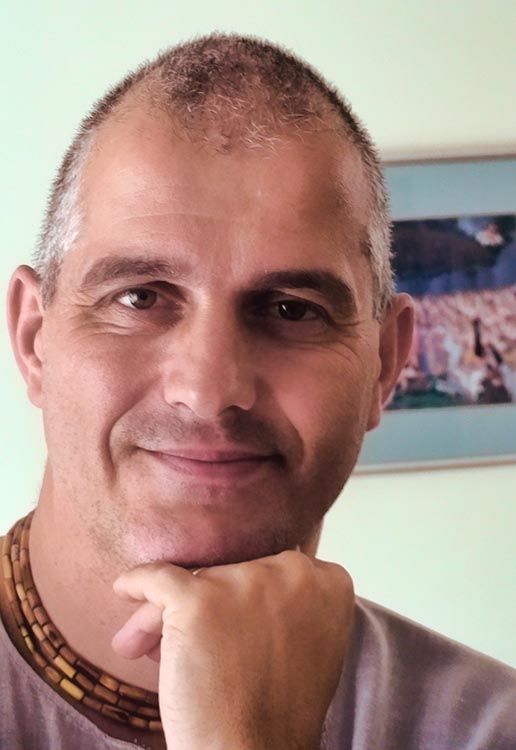 Goran Pejaković lives in Zagreb Croatia. He is a lecturer, adviser and personal trainer known for his dedication to lifelong learning. Last 25 years he practices spirituality under capable guidance and shares experience in compassionate and trans-formative communication and spirituality through seminars, lectures, workshops and personal mentoring. He is also an organizer of the retreat for personal development and spirituality. Knowledge gained in Croatia, Europe and India he complements with skills in mediation and ombuds work through which he serves in international spiritual organization as a representative for Croatia. Goran Pejaković lives in Zagreb Croatia. He is a lecturer, adviser and personal trainer known for his dedication to lifelong learning. Last 25 years he practices spirituality under capable guidance and shares experience in compassionate and trans-formative communication and spirituality through seminars, lectures, workshops and personal mentoring. He is also an organizer of the retreat for personal development and spirituality. Knowledge gained in Croatia, Europe and India he complements with skills in mediation and ombuds work through which he serves in international spiritual organization as a representative for Croatia.

T.S.: Goran it is very nice to talk to you. Few months ago we have started a media debate, that I have to admit paid such a huge attention and still it is on the matter of Spirituality - Business connection. So, Goran is there a connection between Spirituality and Business?
G.P.: There is deep and essential connection between the two. It is the connection similiar to the connection between the soul and body. Soul gives life to body. The same way spiritual principles give life to business. It doesn't seem so in today's world focused only on business and giving pleasure to the senses that there is connection between spirituality and business. But such world view is incomplete. Business and giving pleasure to the senses is just a part of the social picture and, if presented as complete, brings people in illusion that there is no other reality. Spiritual reality is the source of the phenomenal world and social phenomena, as part of this world, has basically four main components: dharma, artha, kama and moksa.
 On the top of the social hierarchy of needed components is dharma, or high system of values according to the principles of spirituality given by God. Artha or economic development follows this principles in activities of earning ones livelihood. Kama, or satisfaction of ones desires according the spiritual principles is next. After realizing that these three together do not bring lasting happiness, comes moksa or serious search after the purpose of life that is higher then visible reality. On the top of the social hierarchy of needed components is dharma, or high system of values according to the principles of spirituality given by God. Artha or economic development follows this principles in activities of earning ones livelihood. Kama, or satisfaction of ones desires according the spiritual principles is next. After realizing that these three together do not bring lasting happiness, comes moksa or serious search after the purpose of life that is higher then visible reality.
Business is connected to spirituality and business principles should evolve from spiritual principles. In this way the society follows high values and prospers economically at the same time. Separating one from the other is like separating the stomach from the rest of the body. Business can not be sustainable without spiritual principles as guide.
According to spiritual knowledge there are four types of business based on people's qualities and types of work: intellectuals and teachers as head department of society, state leaders, military men and administration as arm department of society, farmers, merchants and business people as belly department of society, and laborers as leg department of society. The whole body is one unit but has different departments.
The head department is most important department, because without the head the other departments cannot function. The head is meant for high-value culture. Without culture every type of business creates confusion and chaos. Any business you do in chaotic condition will never be perfect. And that is what we have at the present moment. So there must be one section of people, the head department, who give advice to other departments. They are meant to guide society in high-value culture. Culture means knowing the aim of life. Without understanding the aim of life, a man is a ship without a rudder. Head department is the first need in today's society, then the other departments can get good advice.
 Business can be done nicely only in society following a proper cultural system. Instructions for a perfect cultural system are given in Srimad-Bhagavatam. This is a holy book, part of the books of knowledge,Vedas. Business can be done nicely only in society following a proper cultural system. Instructions for a perfect cultural system are given in Srimad-Bhagavatam. This is a holy book, part of the books of knowledge,Vedas.
In a state, you have to follow the rules of your government. If you don't you are a bad citizen and cause chaos in society. Similarly, in the cosmic state – that is, in this material creation as a whole – if you do not satisfy the Supreme Lord, the proprietor of everything then there will be a chaotic condition. Vedic culture teaches that whatever you do you must satisfy the Supreme Lord. That is the real culture.
Here I presented a part of knowledge that connects spirituality and business. Of course, there is lot more for those interested in the topic.
T.S.: OK, then the next question is can Business function in Mode of goodness without Spirituality?
G.P.: The modes of ignorance, passion and goodness interchange. This world is the place of constant change; panta rei. The atmosphere governed by these three principle qualities of the world is like a river, never the same.
 Regular contact with spiritual reality ( pure goodness ) brings functioning in goodness. Adjusting to the level of activities in goodness and constant practice also bring goodness. Just like when plane flies from destination A to destination B, it is mostly out of the route. Still, the plane gets to the desirable destination by adjusting it to the course constantly. Regular contact with spiritual reality ( pure goodness ) brings functioning in goodness. Adjusting to the level of activities in goodness and constant practice also bring goodness. Just like when plane flies from destination A to destination B, it is mostly out of the route. Still, the plane gets to the desirable destination by adjusting it to the course constantly.
That's why one of the definitions of advancement says:“Progress is series of adjustments in right direction“. In order to be in goodness one has to practice acts in goodness and regularly visit spiritual reality through chosen spiritual practice. Without spirituality, business is sentenced to modes of passion and ignorance which lead to degradation of values and principles in society. In such society exploitation and violence is common thing. There is no goodness when such atmosphereprevails.
Goodness is characterized in this simple way:
Be – do – have
What I do springs from what I am (qualities and character) and results in what I have.
Passion has different order:
Do – have - be
What I have comes from what I do and then I can have and be in certain way.
Ignorance is like this:
Have – do – be
I need to have something first in order to act in certain way and become a person of certain qualities.
Business is, in this regard ,more in passion and ignorance then in goodness. Goodness is still needed in business to keep it focused on high values of conduct.
T.S.: What are Basic Spiritual Principles commonly used in everyday Business?
G.P.: Most of the valuable principles in business are spiritual in origin. Some of the principles are:
- Think long term (eternal)
- Be trustworthy
- Take full responsibility for what happens to you
- Adjust your action according to place, time and circumstances
- Be enthusiastic
- Endeavor with confidence
- Be patient
- Lead by principles
- Stay in association of the people with same high values
- Seek first to understand then to be understood
- Ask for the help from 'higher authority'
- Be cooperative
T.S.: Tell me something about connection Spirituality - Religion - Religious Customs - Business?
 G.P.: Spirituality gives us information and experience of our eternal identity. It gives us knowledge about our relationship to God and nature that surrounds us. It gives us the goal of life and a process to achieve it. It gives the whole picture. G.P.: Spirituality gives us information and experience of our eternal identity. It gives us knowledge about our relationship to God and nature that surrounds us. It gives us the goal of life and a process to achieve it. It gives the whole picture.
Religion gives us specific way of following the principles of spirituality according to specific time, place and circumstances. Each religion derives specific customs suitable for that time and people.
Business is supposed to follow the line of spiritual principles that connect us to God.
 If the society is godless or on superficial level of following religion, such society lacks power and business tends to impose itself as the savior of the world. Money becomes God and those that have money become the priests who set up the rules of conduct. Disconnected from higher purpose, such rules bring more misery to the people. If the society is godless or on superficial level of following religion, such society lacks power and business tends to impose itself as the savior of the world. Money becomes God and those that have money become the priests who set up the rules of conduct. Disconnected from higher purpose, such rules bring more misery to the people.
There is no such thing as spiritually disconnected and long term happy.
 Such business takes care of short term profit and does not give lasting solutions. God-centered business takes care of high spiritual principles, other people and nature, and searches for sustainable economy. Such business takes care of short term profit and does not give lasting solutions. God-centered business takes care of high spiritual principles, other people and nature, and searches for sustainable economy.
Vedic knowledge says that economy should be based on land, not on machines.
Einstein said that he feared the day when technology will overlap with our humanity. He concluded that the world in this case will only have a generation of idiots.
T.S.: How would you define Spiritual Intelligence?
G.P.: When you know who you are, what is this world, who is God and when you know relationship between these three, then you are spiritualy intelligent. This knowledge makes humans so special. When you know your eternal identity as soul, part of God and you act on it, that is called spiritual intelligence.
T.S.: What is the difference between Spiritual Intelligence and IQ?
G.P.: IQ is a way of trying to measure cognitive intelligence. Different tests are made for this to assess intelligence. It is more or less capability to find solution in new situation. That's why different tests are given to show how someone solves different challenging tasks.
Spiritual intelligence is that intelligence which sees soul in every living being and sees unity of all beings in relation to God.
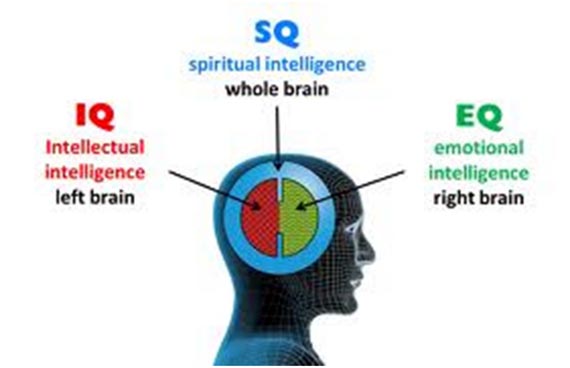
Basically IQ speaks about human being trying to find his place in the universe while spiritual intelligence speaks about soul having human experience and coming back to his original situation of eternity, knowledge and bliss through the process of re-connection with God.
Spiritual world view says:“ Without the shelter of the spiritual soul, the material body cannot exist...“
Following that knowledge, soul searches after God as ultimate shelter. This connection gives all needed intelligence for success in life.
That is why it is said in the Vedas, yasmin vijnäte sarvam evam vijnätam bhavati: if one properly understands God, he can understand any subject matter very nicely...
T.S.: Communication is very important part of life and business. What is Spiritual Communication?
G.P.: Spiritual communication is somewhat unusual because in such conversation even between two people there are three persons. God is present. If you alone address God through prayer then you can say two are present. When does spiritual communication take place? It takes place from the moment a person realizes that he or she needs help. It is wonderful to ask God for success in business or any other communication. For that we should be sensitive enough to see if God likes our proposal. Spiritual communication means respecting the free will of those involved and taking 100% responsibility for what is happening to us.
It also means that God has a free will to support our ideas or not. We can judge our endeavor by the results we get. If the results are long term beneficial for all living beings and brings us closer to God (eternal results), then we are on the right track.
If the results are detrimental for living beings and nature and does not give pleasure to God, then such endeavor is a highway to trouble.
In spiritual communication it is not enough to have good intention. It is also important to know the right way.
T.S.: Trans-formational or conscious communication is part of the Business that should be used. Why?
G.P.: The basis of trans-formative communication is respect of free will; ours or free will of others.
Such communication creates an atmosphere of understanding, respect, trust, support and focus on satisfying the needs of all subjects involved. Such communication respects every moment as wonderful gift meant to teach us something in order to make life more wonderful. In modern terminology it is sometimes called win/win communication.
 On the opposite side is communication that does not take care of the free will and needs of others and searches for one sided profit of different kind, no matter what is the cost. It is easy to understand which kind of communication is sustainable. On the opposite side is communication that does not take care of the free will and needs of others and searches for one sided profit of different kind, no matter what is the cost. It is easy to understand which kind of communication is sustainable.
It is very important to understand one principle: We can't make anybody do anything.
In other words, we will pay for our manipulative, careless and disrespectful communication sooner or later. Most probably it will come when we least expect it.
From the spiritual perspective it is mostly done through more then one lifetime.
T.S.: Can you name some examples of avoiding violent communication and turning them into compassionate with achieved results?
G.P.: Compassionate communication is a vast area. You can be violent towards other people in so many different ways and on so many different levels. Some of violent communication is obvious while the other is not so easy to detect. Here are two such examples:
● Obvious: „You are such a lazy full.“
● Not so obvious: Father speaks to a daughter: „Here comes my princess.“
If we examine these examples closer, this is what was violent:
● 'Lazy full' is a judgement. Judgement is one of the common ways of blocking the communication. It is most likely that the other side will response by defending or attacking the person back.
To turn such communication into compassionate is to replace judgement with observation.
For example:“You came late for the job five times this month and this resulted in 20% less salary to support your family.“
If you add how you feel about it and what is your concern in caring for the person, it will probably bring completely different result.
● 'Princess' is a judgement. A positive judgement is still a judgement. This judgement is static and does not really describe person in full . Maybe even the daughter is not satisfied with her behavior at the moment and she still gets this judgement from the father.
She can even become attached to the 'title' and hide some misbehavior in order to keep the 'princess' on the throne.
 To turn that in compassionate communication father might say: „I love you so much, whatever happens I want you to know this.“ To turn that in compassionate communication father might say: „I love you so much, whatever happens I want you to know this.“
Intended message might be the same but the communication is different and respects the free will of the person we speak to.
Compassionate communication focused on needs is very much helpfull in solving different situations that we usually call 'problems'. Here is one simple example:
1. Two people are working at the kitchen. Both of them want lemon and only one is left. So, they fight to win the lemon by taking as strong position as possible.
One can say:“I am the head of the kitchen.“
The other may say:“I can not wait for the other lemon, people depend on me having it.“
They may try to outdo the other in arguments supporting their position. That will not solve the problem.
Solution is to ask: what do you need a lemon for?
The answer might be:
A: I need it for the cake.
B: I need it for the lemonade
That can bring both parties to the level of satisfying their needs. For cake you might need peel, while for the lemonade you need juice.
This is very siplistic example that shows an important principle of moving from the level of position to the level of needs.
In order to speak compassionately we need to learn what are the obstacles on the way and what is the process of communication which respects the free will of those involved and focuses on needs. The result might also be that 'we agree that we do not agree', but we do not fight with each other and do not behave violently in different ways.
T.S.: Is there a connection between transformational communication and four principles of freedom
1. Compassion
2. Truthfulness
3. Purity
4. Austerity?
 G.P.: Following this four principles of freedom gives space for the person to make decisions which are on the line with spiritual goals. Breaking this principles takes power from compassion, austerity, truthfulness, and purity which are very important for spiritual practitioner. Common men might not agree to follow this rules because of the difference in goals. G.P.: Following this four principles of freedom gives space for the person to make decisions which are on the line with spiritual goals. Breaking this principles takes power from compassion, austerity, truthfulness, and purity which are very important for spiritual practitioner. Common men might not agree to follow this rules because of the difference in goals.
In the same way a spiritual perspective of nonviolence is also on a frequency of the soul and says that to be non-violent in the highest spiritual sense is to give person a knowledge about the soul and God.
All of these four activities mentioned above are helping a person to absorb in the knowledge of the soul. Thus it takes away people from the level of gratifying the senses as the prime goal of life, which is available in all species of life.
Beside that there is obvious violence in this activities:
1. Killing animals is obviously violent and supports the culture of violence. It is violent also because we deny our responsibility for the unnecessary pain we give to animals and denial of responsibility is a great obstacle in communication.
2. Gambling disrespects honest work and gives a message that you can get something for nothing. We all know about the violent effects of addiction to gambling for the family life and other relationships.
3. Most of intoxication is very much violent to the body and mind. Addiction to intoxication is next level which very often results in different ways of additional violence.
4. The ways illicit sex is violent to the relationships is more then known. Just read the daily newspapers and see the results.
Real nonviolence which has high aim of life will certainly avoid this four activities.
T.S.: Can you name some rules and principles of trans-formative communication?
G.P.: First of all „Be the change you want to see“, as Gandhi said. We need to show with example if we hope for the change in others to occur.
There are some do's and some don'ts on the way to change.
We can start with recognizing the habits that are unfavorable for trans-formative or compassionate communication:
Judgement, giving 'names', labeling, comparison, denying responsibility, demanding ...
All these habits block giving from the heart.
A person wants to communicate the need for something but because of unwanted habits and many other reasons it can come out as labeling or some other tragic way of expressing the need. Possibility for the other person to hear the need behind such communication is minimal. It is more likely that a person will take it as offence or attack. The response is usually 'fight or flight' and alienation in relationship.
One of the main principles in such heart-level communication is to try to guess the feelings and needs of person. Even if we are not right, a person will rectify us and lead us to true feelings and needs. Then we can work on strategy which will satisfy the need.
Another principle is to understand that all needs are good. They are common for all people and we can accept them as such easily.
We can choose to learn observing without judgement if we want to come closer to people.
We can learn the proper use of feelings.
We can learn to ask for the specific, positive and doable activity from person to increase our chances of meeting our needs.
We can learn to communicate and thus transform our life for better.
If we do not learn how to communicate, we will have only one big problem. We will be in illusion that communication happened.
T.S.: In nowadays it seems to me that the values are turned upside down and what is bad is named virtue and what is virtue is qualified as bad. Can you say something more about that ?
 G.P.: The flower of high values is in the care of intellectuals and teachers – the head department of society. They are traditionally godly people independently thoughtful and endowed with high qualities like: peacefulness, self-control, austerity, purity, tolerance, honesty, knowledge and wisdom. Such people live simply, think deeply and advise all other classes of society in the values given by God. State leaders, military men and administration rule under the umbrella of such good advise. They take care that merchants, farmers and business people do their duties and they protect them from other rulers and protect laborer class from being exploited. The social body functions nicely. Such godly culture under care of capable monarh can provide for all the needs of society members and have the highest values at hand. G.P.: The flower of high values is in the care of intellectuals and teachers – the head department of society. They are traditionally godly people independently thoughtful and endowed with high qualities like: peacefulness, self-control, austerity, purity, tolerance, honesty, knowledge and wisdom. Such people live simply, think deeply and advise all other classes of society in the values given by God. State leaders, military men and administration rule under the umbrella of such good advise. They take care that merchants, farmers and business people do their duties and they protect them from other rulers and protect laborer class from being exploited. The social body functions nicely. Such godly culture under care of capable monarh can provide for all the needs of society members and have the highest values at hand.
If the head department people forget God who is the soul of the social body, it is only the question of time when will social body collapse under unsolvable complexities of life. Rulers will notice that advises are not giving the same result and will try to rule on their own advice. Without the saintly head, monarchy leads to tyrrany. Merchants, farmers and business people do not feel protected and decide to rule on their own because they are the ones who have wealth. The body is without hands for protection and cooperation. Without good advice and protection, their set of values degrades more and they oppress laborer class. Thus you have feudalism or capitalism. The main value is material wealth, money and enjoyment in different pleasures of the world. Laborer class can not withstand such life and take over the rule through communism, socialism or democracy. Belly is cut of and now you only have legs running around.
Basically, today's capitalist society is belly and legs.
In order to restore sustainable society with high values, we need God-centered social order lead by the people whose loyality to God and personal qualities are stronger then the pressure of the selfish desires of other members of the social body. Such influence is required and is based on the strength which is beyond this world – the strength of following God's advice.
Learned man said once:“If you do not love God, you will love dog.“
It is up to us to choose. We are destined to love and be loved and we will not settle for anything less.
T.S.: Did we forget something and you want to add?
G.P.: Let us do our best and God will do the rest.
Needs and strategies in spirituality
Interview Vani Seva featuring Goran Pejakovic
V.S.: How understanding of human needs can help us to lead better life, make advancements in life and spirituality, prosper and have better relationships?
G.P.: When we talk about the needs and values actually we are really talking about what is most important to us. This constitutes our personality and our life. If we, in communication with ourselves, are more aware of our needs and values, which we would like to have in our lives, we can connect much better to ourselves and at the same time connect with others at the same level. Because the needs are something that is the same in every person and every need is okay. For example, everyone has a need for love, understanding and respect… When we speak on that level, we understand each other. This is a human level on which we are speaking universal language where everybody is on the same wave length. If I say I'm hungry, I need food, everybody understands that food is something that you really need. We all have same real needs.
 Sometimes people mistake strategies for needs and that is the place where it can get to a different level which is not helpful. Needs are very important because if I know what I need and you know what you need then we can communicate on the level of solution. Otherwise, probably I will speak about what I don't need and you will speak about what you don't need. There is no amount of what we don't need that will make us happy. For instance, something happened and we agreed that you will do something until 12 o'clock and you didn't do it and I need it. I can say “You are so lazy”. At that point I'm not connected to my needs. I'm connected to what I don't need, that is assaulting you and giving you a bad names and etiquettes. If I connect to my needs through feelings; “How do I feel when you are not coming on time? I feel disappointed. What do I need? I need security that when we agree upon something that everyone follows it. Okay, so what can I do now? I can speak with you and see how we can arrange our meetings to prevent this from happening, in other words, for everyone to be able to come on time.” Sometimes people mistake strategies for needs and that is the place where it can get to a different level which is not helpful. Needs are very important because if I know what I need and you know what you need then we can communicate on the level of solution. Otherwise, probably I will speak about what I don't need and you will speak about what you don't need. There is no amount of what we don't need that will make us happy. For instance, something happened and we agreed that you will do something until 12 o'clock and you didn't do it and I need it. I can say “You are so lazy”. At that point I'm not connected to my needs. I'm connected to what I don't need, that is assaulting you and giving you a bad names and etiquettes. If I connect to my needs through feelings; “How do I feel when you are not coming on time? I feel disappointed. What do I need? I need security that when we agree upon something that everyone follows it. Okay, so what can I do now? I can speak with you and see how we can arrange our meetings to prevent this from happening, in other words, for everyone to be able to come on time.”
V.S.: What is the difference between needs and wants?
G.P.: Needs a something that is common denominator to every human being. We all have the same needs. Wants are actually strategies how to achieve the needs, how to satisfy our needs. Both are important. Needs are identical to all of us. Strategies for satisfying those needs can be completely different. For instance; I have a need for recreation and you have a need for recreation. We can agree and understand each other on the bases of this need. It can be that the way you partake in the recreation is completely different from how I do it. For example, I play basketball, but for you it's better to drive a bicycle, to dance or to do something else. Strategies can differ, needs we share. This is the first difference.
The second difference is that needs never contain any reference to someone else doing something. For instance; if I say “I'm hungry”, this is a need. However if I say “I need you to buy me food…” this is not my need, this is a strategy. So “I'm hungry” is a need and “I want you to...” that includes someone doing something, is strategy. We can even use the word “need” in the sentence like “I need you to go..” and still this would be a strategy although it seems like this is a need. I can go and buy my food, you can go with me to buy my food, you can go and buy me my food, I can ask someone else etc. These are all different strategies for the same need. So we need to understand the difference between this two. If I have a need for knowledge I can go to college, I can go to high school, I can go for PhD, I can study for myself… these are different strategies. The other way around; if I say “I have a need for position” what is actually a need behind it? Maybe I have need for respect, maybe I have need for security that I will be able to influence some area etc. When we find the need behind the want, we as a leader should always address needs not the wants. That is a big step forward.
V.S.: You mentioned that we need respect, love etc. but specifically in relation to respect, we learn in the spiritual process that we don't want respect. It sounds a little bit self-centred or selfish.
G.P.: When we speak about love and respect, our thinking is that everybody deserves love and respect, is it not? That means that it includes us also! As people use to say; “You begin your voyage of loving the world at home”, you start with yourself. If I do not love myself, how would I be able to love you? If I do not respect myself, how would I be able to respect you? If I don't understand myself, how would I be able to understand you? If I don't take care about my physical needs, how will I be able to take care about your physical needs?… If I do not recognize that my needs are normal, common things, then I cannot appreciate when someone else has the same needs. Everything starts at home. If I'm hungry it will be difficult for me to distribute food to other hungry people. If I feel I need understanding, it will not be easy for me togive understanding for others, as I am lacking it. Respecting myself and others at the same time means sustainable life.
It is very important at first to take responsibility and care for our own emotions and needs. Otherwise we can emotionally starve ourselves and become emotionally needy people. If we expect others to take care about our emotions and our needs then we are not doing our own obligation to ourselves, our job. I'm responsible for my needs, that means I'm responsible for my feelings too. If I want to take responsibility for my feelings I need to take care about my needs. Most of the people focus a lot on thinking with their head. However if you want to connect with yourself then you have to go to the heart and connect with your emotions. Through feelings you connect with the present moment that is connected with the present need in the background. To be able to take responsibility for the feelings we have, we need to satisfy the needs. When we find out what is the need behind it, we are searching for proper strategy to satisfy it. After the needs are satisfied, our job is done for the time being. For instance; if I'm hungry, my emotions can be unpleasant, like feeling disturbed or something, then I understand my need for food. If I choose a good strategy and eat nice nourishing meal, then I will be satisfied and unpleasant emotions will leave. On the other hand if I chose a strategy that didn’t satisfy my hunger, then the unpleasant emotion will come again stronger to show me that need is still not satisfied. In this sense, needs are very, very important on all levels; physical level, mental level, social level and spiritual level.
Who or what will be the strategy for satisfying our needs can be different. For instance; among spiritualists someone could say “I need security” and that person will start chanting Lord’s names immediately or praying to the Lord. Why? Because I know Lord is my security. Someone else who doesn't have this spiritual side will pray maybe to demigod or some person or someone else, or he will try to do something on his own to satisfy the need. For the devotees it is easy because we always have this “God factor”, this God factor that we can always say “I need love…” okay, “Please Lord, show me your mercy. Show me that I'm really eternal, full of knowledge and bliss, that I'm really part of you, that you love me…” in such a way. There is no contradiction. If I don’t love myself than it will be hard to love others.
V.S.: What is your understanding of spiritual needs? Can you give me some examples of spiritual needs?
G.P.: When we speak about spirituality we speak about purpose in life. Most of us want to have purpose in life. We want to know why we are here in this world. We can pray to the Lord to reveal us the purpose of life which is according to His wish. Then we can have a mission in this life which is according to talents and capabilities He gave us. In Bhagavad-Gita there are two verses that are mentioned twice, one of them is man-mana bhava mad-bhakto and the other one that speaks how important it is to do your duty even if you are doing it imperfectly. That is better than to do duty of another person. In this sense what is your purpose here with this body to help you to achieve spiritual goals is also there. So what is my mission? Why am I here? O, my sweet Lord, what is my mission for you here? We can connect whatever we do with spirituality. We can spiritualize things by offering these things to the Lord. Some people say; “If I do something in life, will it really help me become the best person that I can be?”. In this way, I think will this help me to become more connected to the Lord. In the long run, I choose strategies which will help me become more connected to the Lord and what he wants from me. When we are connected in love constantly, we will understand.
Transformational communication
Author: Goran Pejaković
What is transformational communication?
It is a conscious communication with ourselves and others. It changes unhealthy habits, questions limiting beliefs, assumptions and established re-activity, it transforms degrading thoughts, words and actions into positive, clear, concrete and doable steps to enrich our lives and the lives of the people around us. It values free will and keeps us in the present moment which is the only place where change is possible. With that it supports love which is the most powerful force in the world. Transformational communication is the natural state of the soul and is practiced with joy. With freeing creativity it leads life towards fulfilling every need, including the two most sublime needs of all living things – the need to love and the need to be loved.
 Loving and being loved, don’t we all want that? We try to give and receive love in various ways, but we are not always successful at it. Some might say that we are rarely “on course”, while the most pessimistic among us would call love a “myth”. Bono Vox’s lyrics are no accidental: “What more ‘in the name of love’?” referring to uncomfortable, sometimes even violent events in relationships between people and nations that are represented as expressions of love. So much has happened, is happening and will happen in the name of love, so much of it having more to do with violence, obsession, fear, neglect and so on, than with love. Loving and being loved, don’t we all want that? We try to give and receive love in various ways, but we are not always successful at it. Some might say that we are rarely “on course”, while the most pessimistic among us would call love a “myth”. Bono Vox’s lyrics are no accidental: “What more ‘in the name of love’?” referring to uncomfortable, sometimes even violent events in relationships between people and nations that are represented as expressions of love. So much has happened, is happening and will happen in the name of love, so much of it having more to do with violence, obsession, fear, neglect and so on, than with love.
What makes this communication different from other types of communication and how can we entice change?
The key to success is a conscious selection of reactions to what is happening in our life. Steven Covey says: “What is happening is not the problem; our reaction to what is happening is the problem.” Therefore, let’s take responsibility for our life. Let’s abandon excuses like they were worn-out clothes. Here and now, let’s chose thoughts, words and actions that will direct our life towards growth, the kind of satisfaction in our relationships we have never dreamt possible, the wealth we have thought of as inaccessible, the health that previously seemed unattainable and unimaginable spiritual fulfilment. This is a communication of wisdom, experience and maturity. And it begins with being present and transforming communication with ourselves.
Why “transformational”?
We are the co-creators of our destiny. Destiny is a process. This process begins with a system of values and convictions we have consciously or unconsciously chosen which represents the fertile ground for shaping our thoughts. Thoughts become words, words become actions. Repeating actions creates habits which in turn create our destiny with their stubbornness and resilience to change. By using communication which illuminates and bring awareness of our deepest values and needs we are enabling the harmonization of our inner world and our outer expression. In this way we can change or restrictive habits.
“When you change the way you look at things, the things you look at change.” This wisdom refers not only to the things outside of us but also to our inner world. The existence of things in external reality is a product of initial creation from within. By changing the inner world of values, convictions and attitudes we are creating a new reality inside and out.
For example, someone will change the way they see their life because of a powerful external influence, such as the death of a loved one, a realization that they are suffering an incurable disease and have two months to live, or by moving to another, significantly different, culture. Someone else will experience insight uncommon for the average experience and will not be able to “remain the same”. Likewise, an individual or a group may go through an intense and deeply emotional or spiritual experience which will change them in a way that may also deeply transform their view of the world. But outside experiences do not need to be the only trigger for change. You are the factor that can prompt the changes you want to see, you do not have to wait for them to “happen” through outside influence.
We may ask ourselves when communication has the power to bring about change...
True transformation is not mental or intellectual. It happens only when we have an experience which gives us “higher taste.” Relationships coloured with mutual respect could be called “higher taste” experiences in comparison to those filled with objections, critiques, abuse and the like. In order for change to happen, therefore, it is necessary to apply theory in practice. In other words, we need to choose to consistently live out our internal value system. Let’s look at the lives of people who have influenced other people and we will see that they practiced what they “preached”.
This is why we are suggesting the following three steps to those who want to succeed in personal growth and development:
1. Collect information: carefully research the area in which you want to advance to a higher level.
2. Dare to be introspective: from different angles evaluate how this information pertains to your life.
3. Consistently apply in practice the principles you have learned: through application you are fortifying your insight, and without insight there is no change.
In order for knowledge, including knowledge on communication, to have a transformative effect, it has to be on the level of insight. In order for real change to happen, information is not enough. It has to be lived! This is especially important in the modern age of information “flooding” in which one may think that Internet itself is enough and that there is no need for a teacher. Don’t be surprised if your child has the same idea and begins to think that they do not need to go to school because they can use Google.
This sort of communication with yourself and others might me more time consuming in the beginning of the learning process because during the process we keep checking our assumptions about every aspect of our lives. The reward for success, however, is immeasurable – transformational communication can fulfil even the deepest needs.
Here’s an example: You have just arrived at John’s 35th birthday party. There’s John’s mother who wants to tell something to her son. She says: “John’s a good boy, he should just be more careful with money. He spends too much on unnecessary things, and now he has a family he has to provide for. He was never good with money. He must get that from his father. If it weren’t for me, his father would spend everything on his friends and sport!”
The typical reaction in this kind of communication would be for John to roll his eyes and beg God for her to finish her speech as soon as possible, asking himself why this keeps happening to him, even though he is aware of his mother’s good intentions. In the case of transformational communication, John would “read between the lines” and focus on what his mother is feeling and what she needs. He could sense that she is worried for his and his family’s safety and know that the words she is saying are actually an expression of love, but she is unable to express herself without critique. Strengthened by deeper understanding, he can chose loving words and say something like: “Thank you, mother. I am grateful for being able to rely on you thus far. I am glad to hear in your words that this is still the case. I love you.”
We all have the ability to deal with life’s challenges constructively. Let’s do it with a smile!
We can see that change is something that continually happens in this world. Let’s dare to change! In the words of Henry David Thoreau: “I know of no more encouraging fact that the unquestionable ability of man to elevate himself by conscious endeavour.”
Another suggestion: ask for advice and guidance from those who have more experience. A role model is an irreplaceable source of help.
Communication – Questions and Answers
Author: Goran Pejaković
1. What is communication?
Verbal or nonverbal, communication is everyone’s need. It is an exchange of information, knowledge, emotions, attitudes...everything that constitutes life. Communication is the heart of all relationships. Not just that, communication is a relationship. Still, this does not mean that every communication is in itself successful. Sometimes, even though we have talked, we experience that we have not been heard or understood. Most of us think that we can communicate until life shows us otherwise.
 2. When is communication successful? 2. When is communication successful?
When both sides are happy and fulfilled on the level of needs, we can say that we have communicated successfully. Recognizing and respecting our own feelings and needs, and the needs and feelings of others, as well as showing that we care about the positive outcome for all involved regardless of the effort and time needed are all important elements of successful communication.
3. What is the prerequisite to want to improve our ability to communicate?
Every time we want to change something, we need a good enough reason to actually change it. If we know “why”, we will find the “how”. In order to change, some just need to see other people’s experience, while someone else will not change even after feeling the burn on their own skin. For some, unease in a relationship is enough to want more quality in an exchange, while for others not even a frustrating, burdensome or even violent relationship repeated daily isn’t reason enough for change. What is your incentive? Whether we are running away or towards something, we ourselves have to decide on the time and our reason for change towards harmony in communication and relationships.
4. Is it necessary for the other to be trained in communication?
Communication which is compassionate towards the needs of others is so natural that knowledge and perseverance of one party is all it takes for others to follow. The other person doesn’t need to be especially trained in communication because a positive example is very powerful and attractive. With providing a positive example something like resonance happens – the person who knows how to communicate “sends a frequency” for the benefit of all involved that others “attune” to. This can take some time, but it is worth the effort.
5. Can I do it?
Experience shows us that everybody can do it. The capability for compassionate response to our own needs and the needs of others is in every one of us. It just needs to be recognized and elevated to the level where it is useful in our relationships and everyday situations that surround us.
6. What will change in my life?
You will get the chance to better understand yourself and others. This will enable you to connect with yourself more easily and therefore with others as well. You will free yourself from the patterns of learned and acquired negative behaviour. You will become a co-creator of your future in an efficient way which is easy to understand and available for widespread use. You will use your creativity in a positive way and significantly improve various aspects of your life. You will feel better in your relationships and participate in them with more desire because you will consciously choose your personal positive changes.
7. Does communication need to be perfect for us to be content?
We will introduce you to the knowledge and processes that will enable you to listen to what is happening within you and others in a given moment, at that exact place in those exact circumstances. Don’t worry about being perfect at the beginning, just be aware of your needs and the needs of others and focused on their fulfilment. Successful communication is like a plane flight. Even though the plane is never exactly on course, because of a series of adjustments along the way the plane will still land at its destination. It’s the same with communication: stick to the principles of successful communication and listen. Don’t worry, it won’t be perfect, but it will be fulfilling and successful.
8. What is the alternative?
The alternative to improving communication is yielding to old behavioural patterns which for the most part come down to who is to blame and how to defend yourself and attack the other party. That sort of communication is negative and toxic; it leads to compromised relationships and repeated conflicts with our environment, our family and us. You have the chance to change that now. The definition of insanity is to repeat the old patterns and expect new results.
9. What prevents successful communication?
Our own pain, alienation from ourselves and others, bad habits, prejudice, lack of knowledge about successful communication, not enough perseverance in applying those principles... There are many causes for dissatisfaction in communication and relationships, but guided practicing can help you consciously change then into desirable habits and relationships.
10. What is the best time to start?
A Chinese proverb states: “The best time to plant a fruit was 20 years ago. The second best time is now.” It is the same with successful communication, if you haven’t started already – today is your chance.
11. How can transformational communication help me?
Through texts you can access on this website we will present you with the principles of successful communication. You can learn more about it through seminars, lectures, workshops and personal consultation on offer.
Write to us so we could know your needs!
Success everywhere or nowhere
Author: Aleksandar Todorović, Life coach
Ghandi said that we cannot be successful in one area of life and unsuccessful in others. Life is an inseparable whole.
How to achieve more in life?
Truly successful people maintain a balance between the different roles and responsibilities in their lives. On the other hand, some people sacrifice their family life and friendships for their career, while others sacrifice their career for their family. Both are often unhappy because they are missing something.
A holistic approach to life is based on fulfilling the four basic categories of human needs: material/physical, social/emotional, intellectual/mental and transcendental/spiritual. Our life is like a car with four wheels. If one of the tyres is flat, the car will continue to move for a short while, but will soon have to stop. Similarly, if we neglect one of the needs this will negatively affect all other aspects of our life.
For example, if you neglect physical health, this will reflect badly on your mental state or your interpersonal relationships. When we are sick, the mind tends to be anxious and you are in a bad mood because of physical pain or worrying about missing work. A bad mood can negatively affect our behaviour towards others (irritability, nervousness).
If we neglect our social life, interpersonal relationships, the exchange of affection between people, it will affect our health, motivation and productivity.
If we neglect the spiritual aspect of our life, the need for deeper understanding of the world, the meaning of life, our position in the universe, God, the soul and so on, life can become empty and void of deeper insight. If we neglect our soul, our higher self, the physical pleasures and stimulating the mind through films, music and science this may drain us and leave us with the feeling of inner emptiness, sometimes even hopelessness.
That is why it’s our responsibility to take care of all four aspects of life and align them for mutual encouragement. Taking responsibility for our own life and needs is the first principle of success. When we take responsibility, we feel peace and a firm basis for productive activity. Taking full responsibility for our past, present and future is completely in tune with the principles – the natural laws. If we harmonize our life, our behavior and activity with natural laws, we are increasing the probability of success in all areas. Responsibility gives us strength and empowers us to be efficient.
|
